Doesn't it seem like yesterday that everyone was bracing for the Y2K "disaster" that never came?
And here we are -- another New Year in its infancy. I'm not one for resolutions, but you're reading one of them. I resolve to get out my feelings more this year. They're disjointed, with no connection whatsoever, but here they are.
By this time next year I'll be the mother of an official driver-license-holding teenager, on her way to spreading her wings for independence. I've devoted so much of my being to this child that I'm not sure I'm ready for the empty nest.
She's beautiful, brilliant and sensitive -- exactly what this world needs for its future. Can I let her go? I don't know. She needs to be let go, and I hope and pray I'm not so selfish I can't let that happen. I love her fiercely. She's my life's joy.
I'm recovering from some funky stomach malady, so the first nibble of the day wasn't black-eyed peas and greens. I hope the New Year's gods can forgive this indiscretion and bless me with luck. It would be nice to win the lottery, but you have to play to win. If I can't swoop up on Powerball winnings, I hope I can at least keep my head above water this year.
My little dog isn't getting any younger. He's had eye and back problems this year. I wish him an easy, healthy year as we grow older together.
It's my fervent prayer that the economy pull out of this dismal slump. Uppermost in my mind, of course, is the fate of newspapers. So many good people have devoted their lives to the truth with very few monetary rewards. Please, for their sake -- for my sake, even -- don't let newspapers die. We're not perfect, but we're out there trying our damnedest to give the public an unbiased look at the events coloring their world. The same cannot be said of so many bloggers and citizen journalists, many of whom color themselves as objective but reveal their bent. Kind of like Faux News with a keyboard.
(And yes, I do realize I'm using a blog as my podium. I, however, make no claim to be a journalist here. This is where I blow off steam -- it's subjective, and I have no plans to change that.)
I have high hopes for our new POTUS. Barack Obama is no messiah, but he gives me optimism. New ideas are needed. The status quo is not working. I now count down the days to the end of the error -- a man neither elected by the people nor for the people.
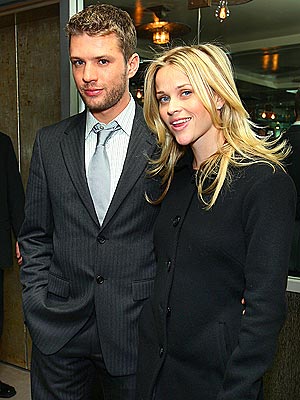
Reading about the possibility of Ben Affleck and Jennifer Garner having a New Year's baby makes me smile. It's irrelevant to my daily life, but I think they're absolutely darling. So many times I've latched my hopes onto a Hollywood couple -- Brad and Jennifer, Reese and Ryan -- only to see it end in divorce. (I still haven't forgiven Brad for cheating with Angelina Whorlie.) I have faith in the Afflecks. They seem ... almost normal.
Why was Friends the last great sitcom? I love The Office, but there is still a void left by the six people who gathered in my living room every Thursday to make me laugh .. and cry. Though I've always loved Friends, I still mourn for the pre-Monica Chandler and the Joey who was dumb and lovable, not brain dead.
Of course, Jim Halpert does help ease the pain somewhat ... (Is he gorgeous or what?!?)
And speaking of guys who make you drool, I'd gladly be Rob Pattinson's cougar. Long or short hair, bald ... I don't care. Just in case anyone out there knows him and wants to pass the word ...
Happy New Year, everyone! Both of you.
Showing posts with label animals. Show all posts
Showing posts with label animals. Show all posts
Thursday, January 1, 2009


Wednesday, June 27, 2007
Soaring with the eagles
The bald eagle has been endangered for practically all my life. What good news to know that its numbers have increased enough to get it kicked off the endangered species list! Fly, eagle, fly!
U.S. bald eagle numbers making recovery
By H. JOSEF HEBERT, Associated Press WriterWASHINGTON - The American bald eagle, a national symbol once almost wiped out by hunters and DDT poisoning, has not only survived but is thriving.
The Interior Department will announce on Thursday it is removing the majestic bird from the protection of the Endangered Species Act, capping a four-decade struggle for recovery.
Government biologists have counted nearly 10,000 mating pairs of bald eagles, including at least one pair in each of 48 contiguous states, giving assurance that the bird's survival is no longer in jeopardy.
The eagle population hit bottom in 1963 when only 417 mating pairs could be documented in the 48 states and its future survival as a species was in doubt.
There were once believed to be as many as a half million bald eagles in North America, predating the Europeans' arrival. The Continental Congress put the bird onto the country's official seal in 1782, although Benjamin Franklin preferred the turkey and called the eagle a "bird of bad moral character."
The Interior Department has been mulling over what to do about the bald eagle for eight years since government biologists in 1999 concluded its recovery had been a success.
Earlier this year, a federal court directed Interior to make a decision on the bird's status by this Friday, acting in a lawsuit by a Minnesota man who complained the government's delays kept him from developing seven acres that included an eagle's nest.
Damien Schiff, attorney for Pacific Legal Foundation which represents the developer, said Wednesday the delisting is "a victory for property owners." But he worried a proposed eagle protection plan using another law will still be too restrictive.
Conservationists called the eagle recovery a vindication of the 1973 Endangered Species Act, which has been under attack from property rights and business groups, and the subject of internal review at the Interior Department.
Environmentalists worry changes in implementing the law will make it harder keep plants and animals from disappearing, especially ones lacking the symbolism of the bald eagle.
"No other species has that advantage," says Michael Bean, an endangered species expert at Environmental Defense. "It's the national symbol."
John Kostyack of the National Wildlife Federation, called the eagle resurgence "truly one of America's great wildlife success stories" that shows the federal law is needed and can work.
"The rescue of the bald eagle ... ranks among the greatest victories of American conservation," said John Flicker, president of the National Audubon Society, whose group's annual bird count shows "the eagle has recovered across America."
The bird, first declared endangered in 1967, was not always held with such affection. Over the decades, it was both revered and hated — which almost brought its demise.
A majestic bird with a wing span that can extend more than seven feet and powerful
talons that allow it to swoop down and grab its prey — be it fish in a mountain lake or a rabbit or raccoon — was viewed by many as a scavenger, nuisance and dangerous predator.It was hunted for its feathers, shot from airplanes, the subject of a 50-cent bounty in Alaska, poisoned in some states and fed to hogs in others. Congress passed a law in 1940, still on the books, that made killing a bald eagle illegal.
But the bird's decline accelerated, thanks to DDT, the insecticide that began to be widely used in the 1940s to control mosquitoes. DDT seeped into lakes and streams and into fish, the eagle's favorite food, harming adult birds and their eggs.
When DDT was banned in 1972, the eagle's recovery began, slowly.
George Wallace, vice president and chief conservation officer for the American Bird Conservancy, recalls when he was still in high school in the 1970s he saw his first bald eagle on Plum Island in Massachusetts. It was a rarity.
"Seeing a bald eagle in the mid '70s was a big deal," he said Wednesday. "It was something you really looked forward to seeing. Now, to be honest, bald eagles are pretty common."
Subscribe to:
Posts (Atom)